
When Should a Perth Business Upgrade to Three-Phase Power?
If your business is adding equipment, tripping circuits, or planning a fit-out, three-phase power may be the next step. Many Perth commercial properties run on single-phase power that was installed when the building had fewer demands, and when equipment was simpler. As your business grows, the electrical supply that was fine five years ago may no longer be enough.
We're helping you understand what three-phase power is, how to tell if your business needs it, and what's involved in upgrading so you can make the right decision before it becomes an emergency.
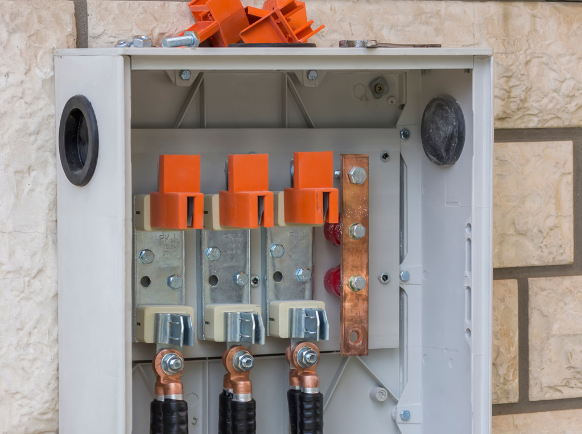
What Three-phase Power Is
Most homes and small businesses in Perth run on single-phase power: one live wire carrying 230V. That's enough for lighting, computers, and standard appliances. But when you start adding commercial kitchen equipment, air conditioning, refrigeration, or machinery, single-phase can hit its limit.
Three-phase power uses three live wires instead of one, each carrying 230V but phased so they overlap. The result: more total power capacity, smoother delivery to heavy equipment, and the ability to run multiple high-draw appliances at the same time without overloading circuits.
Think of it this way: single-phase is a single-lane road. Three-phase is a three-lane highway. Both get you there, but only one handles heavy traffic without bottlenecks.
| Single-phase | Three-phase | |
|---|---|---|
| Power capacity | ~230V, limited total load | ~400V between phases, much higher total capacity |
| Best For | Lighting, computers, small appliances | Commercial kitchens, AC, refrigeration, machinery |
| Multiple high-draw devices | Often trips breakers | Runs simultaneously without issue |
| Equipment performance | Can struggle under heavy load | Stable, consistent delivery |
| Typical use | Small shops, offices, homes | Restaurants, workshops, retail fit-outs, aged care |
Signs Your Business May Need a Three-phase Upgrade
You don't need to be an electrician to spot the warning signs. If any of these sound familiar, it's worth getting a load assessment before the problem gets worse:
- Circuits trip when multiple appliances run at once – the most common sign. If your breaker trips every time the fridge, aircon, and oven are all running, your supply is maxed out.
- You've added high-demand equipment – commercial ovens, coffee machines, air conditioning units, refrigeration. Each one increases the load on your existing supply.
- Air conditioning, refrigeration, or machinery strains the current supply – equipment that runs all day puts constant demand on a single-phase circuit.
- You're planning a renovation or fit-out – if you're adding circuits, lighting, or equipment as part of a fit-out, this is the ideal time to assess whether three-phase is needed before you build out.
- You're experiencing uneven performance or power limitations – flickering lights when equipment kicks in, motors struggling to start, or equipment that won't run at full capacity.
Perth businesses that commonly benefit from three-phase power
Three-phase upgrades are ideal for a wide range of circumstances in commercial settings. We regularly install them for:
- Commercial kitchens and cafes – cooking equipment, espresso machines, and exhaust systems all draw heavily. Most commercial kitchen fit-outs in Perth require three-phase to meet equipment specs and compliance standards.
- Restaurants and catering venues – multiple high-draw appliances running simultaneously during service. Single-phase simply can't keep up with a full commercial kitchen at peak.
- Workshops and trade businesses – machinery, compressors, and welding equipment that need stable, high-capacity power.
- Retail stores with strong lighting or refrigeration loads – butchers, bottle shops, and retail fit-outs with refrigerated displays and extensive LED lighting systems.
- Property managers upgrading older tenancies – many older Perth commercial buildings were wired for single-phase. When a new tenant needs more power, the upgrade is often part of the lease negotiation or fit-out.
- Businesses planning electrification or expansion – if you're adding equipment, extending the fit-out, or moving to electric heating and cooking, three-phase future-proofs the site.
When it makes sense to upgrade to three-phase power
The answer to "when" comes down to five practical decisions:
- Your current supply is already maxed out. If you can't add another appliance without tripping a breaker, you're at capacity.
- Nuisance tripping is affecting operations. Every time a circuit trips in a commercial kitchen, service stops. Every time it trips in a workshop, work stops. The cost of downtime adds up fast.
- New equipment cannot run properly on single-phase. Some commercial equipment simply requires three-phase to operate – check the spec sheet before you buy. If it says "400V" or "3-phase," single-phase won't work.
- You're renovating and want to future-proof the site. If you're already opening walls and rewiring, adding three-phase at the same time is significantly cheaper than doing it as a standalone job later.
- Downtime is becoming costly. If power issues are interrupting your trading hours, staff productivity, or equipment performance, the upgrade pays for itself in prevented disruptions.
What the three-phase power upgrade process involves
A three-phase power upgrade isn't a same-day job, but it's more straightforward than most business owners expect. Here's the typical process:
- Site inspection and load assessment. We visit your premises, assess your current supply, and calculate the total load your business requires now and in the near future.
- Switchboard and supply check. We inspect your existing switchboard to determine whether it can accommodate three-phase or needs to be upgraded. We also check the incoming supply from the network connection point.
- Meter and network assessment. Depending on your property, a meter upgrade or network approval from Western Power may be required. We identify this early so there are no surprises.
- Installation planning. We plan the cable runs, switchboard work, and any downtime required, and schedule it around your operating hours where possible.
- Testing, certification, and handover. After installation, we test every circuit, certify the work with COES documentation, and provide written records for your files.
Cost implications for a three-phase power upgrade
Every upgrade is different, but the main cost drivers are:
- Existing electrical condition – a modern switchboard in good condition costs less to upgrade than an old fuse-based board that needs full replacement.
- Size of the site – larger sites require longer cable runs and more circuit work.
- Complexity of the cable run – how far the switchboard is from the network connection point, and whether the cable route is straightforward or requires trenching or conduit.
- Switchboard upgrades – if the existing board can't accommodate three-phase, a new distribution board is required.
- Metering or network requirements – Western Power may need to upgrade the meter or service connection, which has its own costs and lead times.
- Whether the work is part of a larger fit-out – bundling the upgrade with a renovation or fit-out reduces overall cost because the walls are already open and the electrician is already on site.
The best way to get an accurate figure is an on-site assessment – every site is different, and quoting without seeing the switchboard and supply is guesswork.
Compliance and Safety
Three-phase power installation is not a DIY job. It requires:
- A licensed electrician to carry out all work. In Western Australia, all electrical work must be performed by a licensed electrical contractor (EC15546 for Northman Electrical Services).
- Compliance with AS/NZS 3000 (Wiring Rules) and all relevant Western Australian electrical regulations.
- Safety checks before and after the upgrade – including insulation resistance testing, polarity checks, and earth fault loop impedance testing.
- Written compliance documentation – COES certificate of electrical safety, plus test results and load calculations. Commercial properties should keep these records on file for insurance, audit, and facilities management purposes.
Questions to ask before upgrading
Before you commit to a three-phase upgrade, ask your electrician:
- Will three-phase power solve the problem long term? You want to know that the upgrade handles your current needs and reasonable future expansion.
- Do I need a switchboard upgrade as well? If your switchboard is old, it may need replacing in addition to the three-phase work. It's better to know upfront.
- Will the business need to shut down during the work? Most upgrades can be staged to minimise downtime, but some periods without power are unavoidable. Plan for it.
- Are there any network approvals needed? Western Power approvals can add time. Your electrician should identify this during the assessment.
- What equipment will benefit most from the upgrade? Understanding which appliances or systems will perform better helps you prioritise and justify the investment.
Do all Perth businesses need three-phase power?
No. Small offices, retail shops, and businesses with minimal electrical equipment can operate perfectly well on single-phase. Three-phase is needed when your total power demand exceeds what single-phase can safely deliver, or when specific equipment requires it.
Can a commercial kitchen run on single-phase?
Small domestic-style kitchens can, but most commercial kitchens in Perth require three-phase power. Commercial cooking equipment, exhaust systems, and refrigeration typically draw more than single-phase can handle, and many commercial appliances are manufactured for three-phase only.
How long does a three-phase upgrade take?
The on-site electrical work typically takes 1–2 days, depending on the switchboard and cable run complexity. If Western Power network approvals or meter upgrades are required, the full process can take 2–4 weeks including planning and approvals.
Will the business need to close during installation?
There will be a period without power while the switchboard is being worked on, usually a few hours. We schedule this around your trading hours where possible, and plan the work in stages to minimise downtime. For hospitality venues, this is often done overnight or on a closed day.
Is three-phase power worth it for future growth?
Yes, if you anticipate adding equipment, expanding your fitout, or increasing your electrical load. Upgrading during a renovation is significantly cheaper than doing it as a standalone project later, and it prevents the costly downtime and equipment limitations that come with an undersized supply.
Need a load assessment for your Perth business? If you're adding equipment, planning a fit-out, or dealing with nuisance tripping, the best first step is an on-site load assessment. We'll check your current supply, calculate your actual demand, and tell you straight whether three-phase is needed or not.
Serving your area?
Osborne Park •
Ellenbrook
Northman Electrical works across:
- Commercial kitchens and catering venues – three-phase power, equipment circuits, fault response, and preventive maintenance
- Real estate and property management – compliance checks, RCD testing, pre-lease inspections, and tenancy changeover work
- Retail and commercial shops – fitouts, lighting, switchboard upgrades, and fault finding
- Renovation and construction – rough-in planning, fitout sequencing, and compliance certification
- Retirement villages and aged care – RCD testing, emergency lighting, and scheduled maintenance programs
Got a project planned? Talk to our team to see if we can help!