
Electrical Compliance Checklist for Perth Commercial Properties (2026)
Commercial properties in Perth are required to meet specific electrical compliance standards under the Electricity (Licensing) Regulations 1991 and the Work Health and Safety Act 2020. The key obligations include regular
RCD
testing, emergency lighting inspections, test and tag programs, and switchboard maintenance – each with defined intervals and documentation requirements.
Why Electrical Compliance Matters for Perth Commercial Properties
Compliance isn't a bureaucratic exercise. It's the framework that protects people in your building, limits your liability as a property owner or manager, and keeps you operational when an inspection or audit happens.
In Western Australia, non-compliance with electrical safety obligations can result in:
- WorkSafe WA enforcement action
- Insurance claims being disputed or denied following an incident
- Tenants or employees raising formal safety complaints
- Forced closure of a premises pending rectification
The obligation applies regardless of whether you own the property, manage it, or operate a business within it. Knowing what's required and when is the starting point.
The 2026 Electrical Compliance Checklist for Perth Commercial Properties
Use this as a working reference. Every item should be documented with dated records.
RCD (Safety Switch) Testing – Every 6 Months
Residual Current Devices must be installed on all power circuits in commercial properties in WA, and must be tested to confirm they trip within the required 30mA threshold. Testing every six months is the recommended interval for commercial environments under WA WorkSafe guidance.
What testing confirms:
- The device trips at the correct current threshold (under 30mA)
- Trip time is within the safe limit (typically under 300 milliseconds)
- All RCDs are functional – not just the ones with easy access
Important: the button test on your switchboard is not the same as a proper RCD trip-time test. Push-button tests confirm the device trips – they don't confirm it trips fast enough or at the correct threshold. A licensed electrician uses calibrated test equipment to verify both.
Emergency and Exit Lighting – Every 6 Months
Emergency lighting must be tested to AS/NZS 2293.2:2019 standards every six months. Testing confirms:
- Battery backups hold charge and sustain illumination during a simulated power outage
- All emergency and exit fittings are functional
- Illumination levels meet the minimum lux requirements for evacuation routes
Failed emergency lighting is one of the most commonly found compliance issues in commercial properties – and one of the most straightforward to address with a scheduled inspection program.
Test and Tag – Every 3 to 12 Months (Environment Dependent)
All portable electrical equipment – appliances, power leads, and tools – must be visually inspected and functionally tested on a recurring schedule. The interval depends on the environment:
- Construction and demolition sites: every 3 months
- Commercial kitchens, workshops, and high-use environments: every 6 months
- Offices and low-risk environments: every 12 months
Each item that passes receives a dated tag. Items that fail must be removed from service immediately and either repaired or replaced.
Switchboard Inspection – Annually (Minimum)
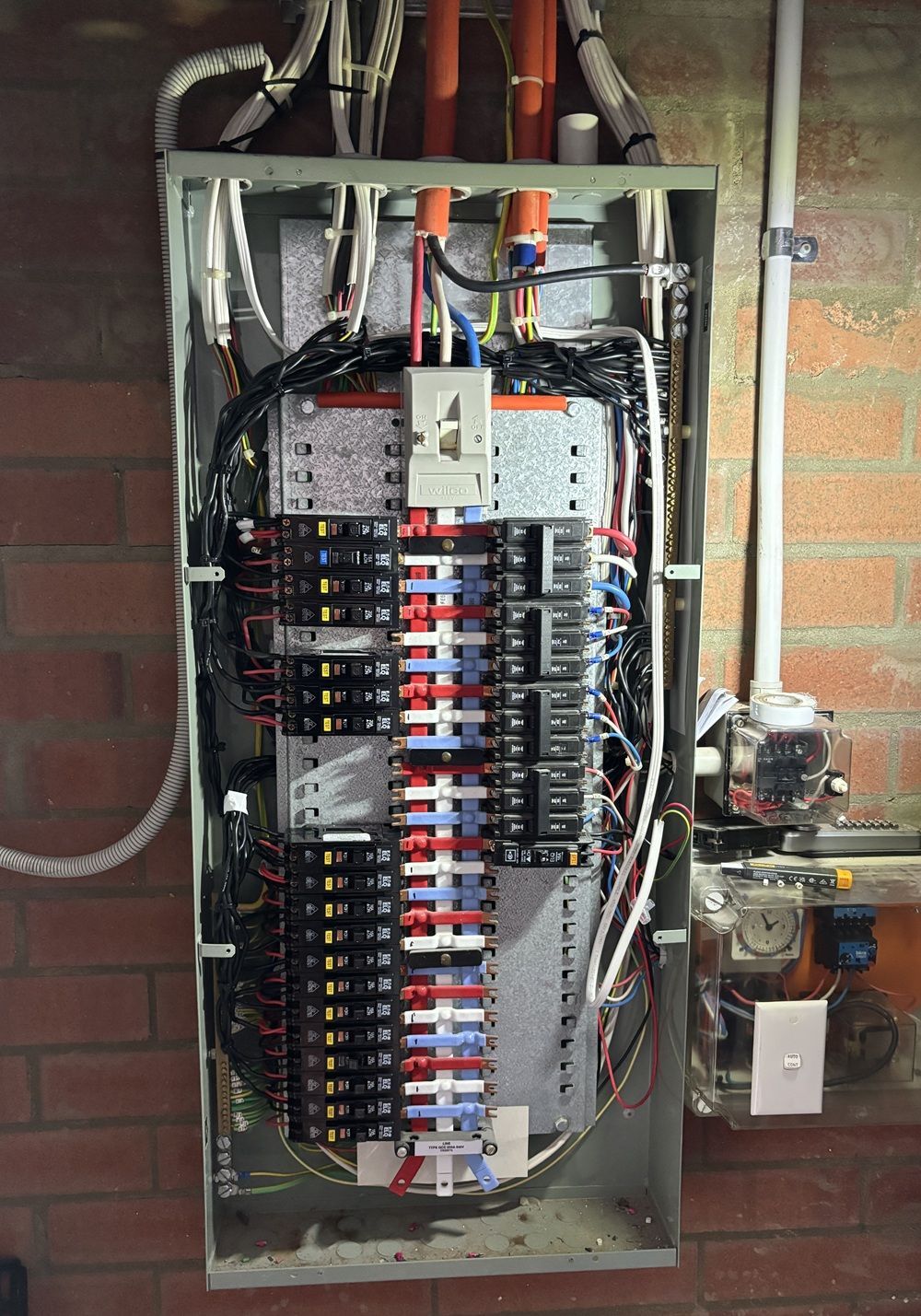
Your switchboard is the central point of your building's electrical system. An annual inspection should include:
- Visual inspection for signs of heat, corrosion, or physical damage
- Thermal imaging to detect hot spots in components and connections not visible to the naked eye
- Verification that all circuits are correctly labelled
- Confirmation that RCD coverage is adequate for the current load
- Assessment of whether the board has capacity for any planned additions
Older switchboards – particularly those installed before 2000 – may not meet current AS/NZS 3000 wiring standards and may need upgrading if significant changes are made to the building's electrical load.
Certificate of Electrical Compliance (COES) – After Every Significant Installation
Any new electrical installation, alteration, or addition to your system must be certified by a licensed electrician and lodged with Energy Safety WA via a COES. This includes new circuits, switchboard upgrades, additional powerpoints, and lighting installations.
If you cannot locate COES records for your property, request them from your current electrician or check with Building and Energy WA.
Earthing and Bonding – At Compliance Inspections
All metal surfaces, structural components, and exposed conductive materials must be properly bonded and earthed. This is verified as part of a thorough compliance inspection and is particularly important in wet areas, commercial kitchens, and any space where water and electrical equipment coexist.
Earth Fault Loop Impedance (EFLI) Testing – At Compliance Inspections
EFLI testing confirms that protective devices (fuses and circuit breakers) will disconnect quickly enough during a fault to prevent injury. This is tested with calibrated equipment and is distinct from the visual inspection of the switchboard.
Who Is Responsible for Compliance?
In commercial properties, the responsibility is shared – and often a source of confusion between landlords, property managers, and tenants.
- As a property owner or landlord: you are responsible for the electrical safety of the building's fixed installations – the wiring, switchboard, fixed fittings, and RCDs.
- As a property manager: you are responsible for ensuring compliance checks are carried out and documented at the required intervals, and that records are accessible.
- As a business operator or tenant: you are responsible for the portable electrical equipment used in your business – appliances, leads, tools – and for a safe electrical environment for your employees under WA's Work Health and Safety obligations.
In practice, the cleanest approach is a
scheduled maintenance program that covers the building owner's obligations and the tenant's
test and tag requirements in one coordinated program.
Is there a legal requirement for electrical inspections in WA commercial properties?
Yes. RCD testing, emergency lighting testing, and test and tag are all mandated under WA workplace electrical safety regulations. Intervals vary by environment and equipment type.
How long should compliance records be kept?
There is no single prescribed period under WA regulations, but best practice – and the recommendation of most compliance professionals – is a minimum of five years. Records should include test dates, results, the name of the testing electrician, and any rectification work carried out.
What happens if a commercial property fails a compliance inspection?
Any items that fail must be rectified before the property can be considered compliant. For critical items – a failed RCD, non-functional emergency lighting – rectification should happen immediately. A licensed electrician will document what was found, what was done, and issue updated records.
How do I set up a compliance schedule for my property portfolio?
The most practical approach is to work with a single commercial electrician to establish a scheduled program across your portfolio. Fixed pricing, consistent documentation, and a single point of contact makes compliance manageable rather than reactive.
Northman Electrical works across:
- Commercial kitchens and catering venues – three-phase power, equipment circuits, fault response, and preventive maintenance
- Real estate and property management – compliance checks, RCD testing, pre-lease inspections, and tenancy changeover work
- Retail and commercial shops – fitouts, lighting, switchboard upgrades, and fault finding
- Renovation and construction – rough-in planning, fitout sequencing, and compliance certification
- Retirement villages and aged care – RCD testing, emergency lighting, and scheduled maintenance programs
Got a project planned? Talk to our team to see if we can help!